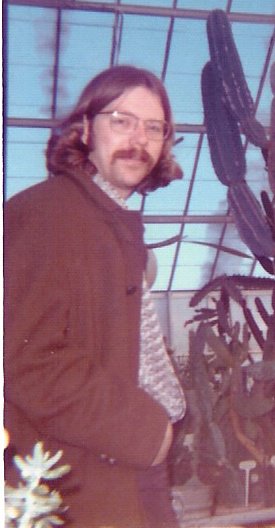
Sunday, November 06, 2005


Everything I Knew Was Wrong
What if everything you thought you knew appeared to be wrong?
I’ve been there. In several posts below I described a bit of what is was like to be raised to believe a lot of lies regarding race, especially regarding African American or black people. I also tried to give a peek into how my mind could change as I was confronted with new information and experiences.
Race was just one area where I began to realize that I had been misinformed. However, it was a very big one. It had powerfully influenced my behavior, my attitudes, my understanding of why there were problems in my life. And so as the misinformation began to be revealed, my world was shaken.
I have been told that one reason some people are so frightened by earthquakes is that the “solid earth” is one thing that they feel they can really depend on. When even that solid ground begins shaking, it robs them of something foundational in their belief about what to expect in this world.
As I became a college student, I saw my own foundations being shaken in a way that I never imagined. I met many people that were very different from those I had known as a boy. There were lots of people from all over the U.S., especially the Northeast. I met foreign students from Asia and Africa. Many of my teachers espoused philosophies that were completely alien to anything I had heard before.
I did not believe that anyone could be sure there was a “God” or gods. I felt rather convinced that the idea of God was just a crutch for those who could not handle all the ambiguity in our lives. So I had no spiritual foundation to rely on.
I began to realize how narrow and bigoted my parents, teachers, family, and friends had been when I grew up in the southern U.S. in the 50’s and 60’s. I very quickly angered my father by questioning things he had taught me all my life. My mother was terrified by the conflict between us. But she was also eager to avoid conflict with my father. So I had no family to turn to.
As I began to understand that I had been taught many lies, I wondered if I had ever been taught any truths. “Firesign Theatre” was a comedy team that had an album titled: “Everything you know is wrong”. I began to consider that as a real possibility. At some level I even understood that the absence of God and the rejection of all authority left me suspended in a featureless void with no hope of direction. I had no sense of purpose that I could defend.
Meanwhile, another part of me kept my life in reasonable order. I continued to study engineering. I found comfort in the way science seemed to explain so many mysterious things. I was an athlete. I found comfort in new friendships and in a relationship with a girl who whom I would marry the same day I graduated from undergraduate school in 1972.
Of course, anyone with the slightest knowledge of that period in the late sixties and early seventies will know that I was certainly not alone in questioning the authority of all I had been taught and the authority of all who claimed to have new answers. It almost seemed that the collective modern western consciousness convulsed and shattered a great deal of the conventional wisdom that allowed those of us with no God to continue to function. We scrambled to find some basis upon which we could continue to do the things that people must do. We still wanted to love. We wanted to be safe. We wanted food, shelter, and a degree of comfort and a sense of security.
“Sex and drugs and rock and roll” is now a funny little phrase. Now it is a refrain from a goofy song recorded decades ago. And I did not chant a mantra to that unholy trinity as I began to dismantle a great deal of what I had trusted in as “the truth”.
I will begin with sex. Simply put, every young male that I knew, including myself of course, was desperately eager to have sex. It is difficult even for me to remember that in the early sixties, sex outside of marriage was truly taboo. Of course, it happened and happened often. However, there was often a heavy price to be paid if it was discovered. It is almost unimaginable that there was a time when characters on T.V. and in movies did not simply just have sex when they wanted to. Even sex within marriage was not discussed or written of in ordinary society.
As I began to question what I had been taught. It was especially convenient to discard prevailing ideas about sex. It was not an overnight process. Nor was it uniform in all age groups and segments of American and European society. However, the rapidity with which ideas about sex changed was astounding.
The suggestion that the girlie magazines and “art movies” of the 60’s would seem quite tame by 1973 would have been laughable. “I Am Curious Yellow” was a foreign film released in 1969. It had brief images of full frontal female nudity. By 1973, full nudity in magazines, movies, etc. was common. The “soft porn” simulated sex films and magazines of the late 60’s were rapidly replaced by hard core pornography that was openly available in every sizable city.
The people who warned us that trouble would come from this dramatic change seemed suspiciously similar to those who had assured me that the races must never mingle. Why should I believe them? I had been told many lies in my past. I will not use this space to relate my personal experience of these changes. Now that I realize just how damaging the changes were, I do not wish to dwell upon them or appear to glorify them. It is my very fervent prayer that the tide has begun to turn, and in God’s mercy he is exposing the lies about casual sex and unbridled lust. May God have mercy on all who have hurt themselves and others by believing and acting on those lies. May God have mercy on me, corrupted, scarred and still fighting against a sinful nature.
Very effective birth control was introduced about this time (“the pill”). Abortion came out of the shadows and was embraced as the fail safe back up when even modern birth control failed. Antibiotics could treat the common venereal diseases of the day. The pleasures of sex began to be declared openly. And the subtle use of sex to sell rapidly became as blatant as it was common.
Drugs underwent a similar amazing cultural transformation. Few member of my generation were aware of the problems that opium, morphine, and cocaine had caused during the late 19th and early 20th centuries. Once again, why should we believe those who warned us of the dangers of mind altering substances? Marijuana was easier to obtain than alcohol by the time I was 19. Incredibly potent doses of LSD could be purchased for less than an hour’s pay at minimum wage. Even middle class college students could easily afford to use drugs as a form of recreation.
The first night that I smoked marijuana, I stood on the side of a hill and stared out at the lights of the city. The effect was subtle. Marijuana in that day was usually weak. I laughed to think of all the terrible warnings I had been given about it. I quickly came to believe that only people who were ignorant, or who were intent on preventing others from having fun, would make such things illegal. Remember, it was illegal for black people to ride in the front seats of a city bus in many cities when I was a boy. It was illegal for a black child to attend a “white” school. Citizens were considered completely justified in torturing and killing a black man if he was thought to have had unacceptable contact with a white woman. A trial was considered a foolish impediment to the need for swift justice.
And so it was that it became common for me to experiment and recreate with drugs. If I had been arrested, simple possession could have cost me years in jail. Like most young men, I made light of such dire possibilities. It would never happen to me!
And the experiments grew more intense. One night in particular I remember taking LSD on a whim in the late evening of what had been a long, tiring day. The hallucinogenic experience that followed is impossible to describe. I was unable to sleep for the following twenty four hours. I ran the gamut from ecstasy to paranoia. I went from exhilaration to tedium and a deepening fear that I would never be “normal” again. Fatigue and fear gripped me for days afterwards. However, my conviction was very strong that drug experiences were a very great privilege that must not be missed. It was so strong that in a month or so I tried LSD again under more controlled conditions and declared that it had opened my mind to a deeper understanding of all there was to know.
I will pass on now to the “rock and roll”. It was clearly more than a style of music. As a whole, rock music was a manifesto for my time. Although it began as early as the 50’s, by the late 60’s it had morphed into something that was wholly alien to the western worlds experience. The instruments, the vocals, and the lyrics were experiments that seemed unfathomable to people of my parents’ age. I remember my grandfather sneering at the “jungle bunny” music that I listened to on my transistor radio. It was more than a decade later before I learned that rock was powerfully influence by the blues, which had its roots in the African American experience.
Imagine that if as a boy I had listened to music from 40 years earlier. Listen to the sound track of “O Brother, Where Art Thou”. That is what I would have been listening too! Now my fourteen year old son listens to mix tapes with the Who, Led Zeppelin, and the Red Hot Chili Peppers intermingled. They are separated by decades and yet seen as part of a common musical heritage.
I hope that the lives of the men and women who recorded 60’s rock are not idolized by anyone today. However, to me Janis Joplin, Jimmy Hendrix, and Jim Morrison were great pioneers who were able to transcend the mundane mess that my parents had made of the world. And when all three died of drug overdoses in a single year, I was not the least bit deterred from continuing to idolize them and many others like them. I saw rock star excesses and even their drug induced rage and vandalism as credible responses to a world that I believed was a sham. More and more what little truth I remained aware of seemed a ploy to placate me and control me.
Sex and Drugs and Rock and Roll. I really believed in them. I felt sure we were on to something. No more war. No more hypocrisy. No more greed.
Please do not forget. There were very real problems with our culture that were being exposed when I was 20. Our air and water and soil had been badly poisoned. I lived just blocks form a river that caught fire and burned for days. It flowed into Lake Erie, which was soon declared completely biologically dead. I did not smell the steel mills in Pittsburgh so much as taste and feel the acrid air they created. The Carnegie Mellon campus was filled with handsome stone buildings that had been rendered charcoal grey and even black by decades of soot filled air. Black workers were denied equal treatment. Women were openly paid a fraction of what men were paid for identical jobs. And of course, black people and women and many others were routinely excluded from many higher paying jobs.
So yes, I was a fool to ignore all the dire consequences of “free sex”, drug experimentation, and a cultish devotion to a revolution in music and mores.
I was right to think that much needed to change. I showed terrible judgment in how I tried to bring about that change.
Now I find myself more than 2000 words into this posting. It would surprise me if even my own loving daughter could stand to read this far. I certainly have no intention of even beginning to recreate, and certainly not to glorify, my life during that era.
No one could live such a life coherently or consistently. I had no integrity. Francis Schaeffer wrote something to the effect that modern man finds himself with both feet planted firmly in mid air. I knew full well that my life had no foundation. I despaired of ever having a reason even to live, much less a rationale for all I did. But so powerful is the drive to survive, that I did go on living. I lived to experience drug addiction, alcoholism, divorce, promiscuity, and anxiety that dogged my every waking moment. I made terrible choices and took serious risks. God mercifully spares me from a full knowledge of the damage I did to myself, and especially to those around me. It is by the grace of God that I am spared an eternity of suffering. Perhaps yet another posting will tell of how God worked all those things to good in my life!
May God richly bless you and spare you from an awful journey like my own. I pray that you will know the truth. I pray that the truth will set you free.
I’ve been there. In several posts below I described a bit of what is was like to be raised to believe a lot of lies regarding race, especially regarding African American or black people. I also tried to give a peek into how my mind could change as I was confronted with new information and experiences.
Race was just one area where I began to realize that I had been misinformed. However, it was a very big one. It had powerfully influenced my behavior, my attitudes, my understanding of why there were problems in my life. And so as the misinformation began to be revealed, my world was shaken.
I have been told that one reason some people are so frightened by earthquakes is that the “solid earth” is one thing that they feel they can really depend on. When even that solid ground begins shaking, it robs them of something foundational in their belief about what to expect in this world.
As I became a college student, I saw my own foundations being shaken in a way that I never imagined. I met many people that were very different from those I had known as a boy. There were lots of people from all over the U.S., especially the Northeast. I met foreign students from Asia and Africa. Many of my teachers espoused philosophies that were completely alien to anything I had heard before.
I did not believe that anyone could be sure there was a “God” or gods. I felt rather convinced that the idea of God was just a crutch for those who could not handle all the ambiguity in our lives. So I had no spiritual foundation to rely on.
I began to realize how narrow and bigoted my parents, teachers, family, and friends had been when I grew up in the southern U.S. in the 50’s and 60’s. I very quickly angered my father by questioning things he had taught me all my life. My mother was terrified by the conflict between us. But she was also eager to avoid conflict with my father. So I had no family to turn to.
As I began to understand that I had been taught many lies, I wondered if I had ever been taught any truths. “Firesign Theatre” was a comedy team that had an album titled: “Everything you know is wrong”. I began to consider that as a real possibility. At some level I even understood that the absence of God and the rejection of all authority left me suspended in a featureless void with no hope of direction. I had no sense of purpose that I could defend.
Meanwhile, another part of me kept my life in reasonable order. I continued to study engineering. I found comfort in the way science seemed to explain so many mysterious things. I was an athlete. I found comfort in new friendships and in a relationship with a girl who whom I would marry the same day I graduated from undergraduate school in 1972.
Of course, anyone with the slightest knowledge of that period in the late sixties and early seventies will know that I was certainly not alone in questioning the authority of all I had been taught and the authority of all who claimed to have new answers. It almost seemed that the collective modern western consciousness convulsed and shattered a great deal of the conventional wisdom that allowed those of us with no God to continue to function. We scrambled to find some basis upon which we could continue to do the things that people must do. We still wanted to love. We wanted to be safe. We wanted food, shelter, and a degree of comfort and a sense of security.
“Sex and drugs and rock and roll” is now a funny little phrase. Now it is a refrain from a goofy song recorded decades ago. And I did not chant a mantra to that unholy trinity as I began to dismantle a great deal of what I had trusted in as “the truth”.
I will begin with sex. Simply put, every young male that I knew, including myself of course, was desperately eager to have sex. It is difficult even for me to remember that in the early sixties, sex outside of marriage was truly taboo. Of course, it happened and happened often. However, there was often a heavy price to be paid if it was discovered. It is almost unimaginable that there was a time when characters on T.V. and in movies did not simply just have sex when they wanted to. Even sex within marriage was not discussed or written of in ordinary society.
As I began to question what I had been taught. It was especially convenient to discard prevailing ideas about sex. It was not an overnight process. Nor was it uniform in all age groups and segments of American and European society. However, the rapidity with which ideas about sex changed was astounding.
The suggestion that the girlie magazines and “art movies” of the 60’s would seem quite tame by 1973 would have been laughable. “I Am Curious Yellow” was a foreign film released in 1969. It had brief images of full frontal female nudity. By 1973, full nudity in magazines, movies, etc. was common. The “soft porn” simulated sex films and magazines of the late 60’s were rapidly replaced by hard core pornography that was openly available in every sizable city.
The people who warned us that trouble would come from this dramatic change seemed suspiciously similar to those who had assured me that the races must never mingle. Why should I believe them? I had been told many lies in my past. I will not use this space to relate my personal experience of these changes. Now that I realize just how damaging the changes were, I do not wish to dwell upon them or appear to glorify them. It is my very fervent prayer that the tide has begun to turn, and in God’s mercy he is exposing the lies about casual sex and unbridled lust. May God have mercy on all who have hurt themselves and others by believing and acting on those lies. May God have mercy on me, corrupted, scarred and still fighting against a sinful nature.
Very effective birth control was introduced about this time (“the pill”). Abortion came out of the shadows and was embraced as the fail safe back up when even modern birth control failed. Antibiotics could treat the common venereal diseases of the day. The pleasures of sex began to be declared openly. And the subtle use of sex to sell rapidly became as blatant as it was common.
Drugs underwent a similar amazing cultural transformation. Few member of my generation were aware of the problems that opium, morphine, and cocaine had caused during the late 19th and early 20th centuries. Once again, why should we believe those who warned us of the dangers of mind altering substances? Marijuana was easier to obtain than alcohol by the time I was 19. Incredibly potent doses of LSD could be purchased for less than an hour’s pay at minimum wage. Even middle class college students could easily afford to use drugs as a form of recreation.
The first night that I smoked marijuana, I stood on the side of a hill and stared out at the lights of the city. The effect was subtle. Marijuana in that day was usually weak. I laughed to think of all the terrible warnings I had been given about it. I quickly came to believe that only people who were ignorant, or who were intent on preventing others from having fun, would make such things illegal. Remember, it was illegal for black people to ride in the front seats of a city bus in many cities when I was a boy. It was illegal for a black child to attend a “white” school. Citizens were considered completely justified in torturing and killing a black man if he was thought to have had unacceptable contact with a white woman. A trial was considered a foolish impediment to the need for swift justice.
And so it was that it became common for me to experiment and recreate with drugs. If I had been arrested, simple possession could have cost me years in jail. Like most young men, I made light of such dire possibilities. It would never happen to me!
And the experiments grew more intense. One night in particular I remember taking LSD on a whim in the late evening of what had been a long, tiring day. The hallucinogenic experience that followed is impossible to describe. I was unable to sleep for the following twenty four hours. I ran the gamut from ecstasy to paranoia. I went from exhilaration to tedium and a deepening fear that I would never be “normal” again. Fatigue and fear gripped me for days afterwards. However, my conviction was very strong that drug experiences were a very great privilege that must not be missed. It was so strong that in a month or so I tried LSD again under more controlled conditions and declared that it had opened my mind to a deeper understanding of all there was to know.
I will pass on now to the “rock and roll”. It was clearly more than a style of music. As a whole, rock music was a manifesto for my time. Although it began as early as the 50’s, by the late 60’s it had morphed into something that was wholly alien to the western worlds experience. The instruments, the vocals, and the lyrics were experiments that seemed unfathomable to people of my parents’ age. I remember my grandfather sneering at the “jungle bunny” music that I listened to on my transistor radio. It was more than a decade later before I learned that rock was powerfully influence by the blues, which had its roots in the African American experience.
Imagine that if as a boy I had listened to music from 40 years earlier. Listen to the sound track of “O Brother, Where Art Thou”. That is what I would have been listening too! Now my fourteen year old son listens to mix tapes with the Who, Led Zeppelin, and the Red Hot Chili Peppers intermingled. They are separated by decades and yet seen as part of a common musical heritage.
I hope that the lives of the men and women who recorded 60’s rock are not idolized by anyone today. However, to me Janis Joplin, Jimmy Hendrix, and Jim Morrison were great pioneers who were able to transcend the mundane mess that my parents had made of the world. And when all three died of drug overdoses in a single year, I was not the least bit deterred from continuing to idolize them and many others like them. I saw rock star excesses and even their drug induced rage and vandalism as credible responses to a world that I believed was a sham. More and more what little truth I remained aware of seemed a ploy to placate me and control me.
Sex and Drugs and Rock and Roll. I really believed in them. I felt sure we were on to something. No more war. No more hypocrisy. No more greed.
Please do not forget. There were very real problems with our culture that were being exposed when I was 20. Our air and water and soil had been badly poisoned. I lived just blocks form a river that caught fire and burned for days. It flowed into Lake Erie, which was soon declared completely biologically dead. I did not smell the steel mills in Pittsburgh so much as taste and feel the acrid air they created. The Carnegie Mellon campus was filled with handsome stone buildings that had been rendered charcoal grey and even black by decades of soot filled air. Black workers were denied equal treatment. Women were openly paid a fraction of what men were paid for identical jobs. And of course, black people and women and many others were routinely excluded from many higher paying jobs.
So yes, I was a fool to ignore all the dire consequences of “free sex”, drug experimentation, and a cultish devotion to a revolution in music and mores.
I was right to think that much needed to change. I showed terrible judgment in how I tried to bring about that change.
Now I find myself more than 2000 words into this posting. It would surprise me if even my own loving daughter could stand to read this far. I certainly have no intention of even beginning to recreate, and certainly not to glorify, my life during that era.
No one could live such a life coherently or consistently. I had no integrity. Francis Schaeffer wrote something to the effect that modern man finds himself with both feet planted firmly in mid air. I knew full well that my life had no foundation. I despaired of ever having a reason even to live, much less a rationale for all I did. But so powerful is the drive to survive, that I did go on living. I lived to experience drug addiction, alcoholism, divorce, promiscuity, and anxiety that dogged my every waking moment. I made terrible choices and took serious risks. God mercifully spares me from a full knowledge of the damage I did to myself, and especially to those around me. It is by the grace of God that I am spared an eternity of suffering. Perhaps yet another posting will tell of how God worked all those things to good in my life!
May God richly bless you and spare you from an awful journey like my own. I pray that you will know the truth. I pray that the truth will set you free.
Thursday, October 27, 2005
What Is So Cool About High School?
If you have read my previous couple of posts, you know by now that I was raised a racist and stayed a racist all the way through Jr. High. As I have reread those posts, I am struck by the fact that I believed something so thoroughly based on nothing but what people had told me all my life. Since I lived my life surrounded by racists in a culture that was racist, I don't recall hearing anyone (in person) argue that racism was wrong. It is likely that at least one or two folks did say such a thing, but they must have seemed so obviously crazy that it barely registered. I watched T.V. and saw the debate going on in our nation regarding racism. T.V. seemed make believe. I didn't know any of the people that were on T.V. And I was assured that people "up north" were crazy. Didn't they prove it by attacking the South during the "War Between the States" as the civil war was always referred to in my schools? I remember being genuinely amazed when President Lyndon B. Johnson took office after John F. Kennedy was assassinated. LBJ started talking about how we had to help black people. He supported the Federal Bureaucrats who were pushing for "equal opportunity”. Wow, how could a guy who grew up in Texas and taught school in Texas go nuts like that? What on earth was he thinking?
So it is true, as I entered High School (we started at grade 10) I was still a florid racist. I was angry with the black boys (all 50 or so of them) who came unwelcome to our school. I was one of one thousand angry white boys, who all figured that the black boys were doing something really bad.
We also knew that if the black boys hadn't begun attending our school, it could still be a boys’ and girls’ school as it had been in years past. Five hundred girls were put far away from us. I couldn't even drive at first. And when I was a boy, boys behaved much better when girls were around. Take the girls away and you saw what the boys were really like. It was not good.
I was pretty mad. I wished someone would do something. Pretty soon boys did start doing things. The least of it was the whispering and pointing, which is pretty awful all by itself.
Then there was the outright name calling and cursing. That had to be really hard to take for those 50 black boys. None of that made much impression on me. I barely remember it. However, when gangs of white boys began to catch individual black boys alone and beat them unmercifully, I noticed. I didn't want to get involved. After all, I might get in trouble. I didn't even exactly think it was fair for half a dozen white boys to pick out a lone, often small, black boy and beat him to the ground, kick him, scream at him, and leave him whimpering or unconscious. But after all, if the black boys hadn't come, they wouldn't be getting beat up. I was a bit scared when a plate glass window shattered near my seat in the cafeteria when a group beating a black boy hit the glass during their vicious flailing. But a little fear and adrenaline was seen as a desirable thing when I was 15. It was much better than the tedium of the classroom. And I never worried for a moment that someone might beat me up. The black boys who were beaten had done nothing except walk in halls where they weren't wanted. If they fought back, they would very likely be killed. After all it was 1000 white boys against 50 black.
Police were sometimes present. They wore plainclothes, but they looked like cops. When they bent over to drink at the water fountain, their gun peaked out from under their shirt. We laughed and pointed. Who did they think they were fooling in those plain clothes?
An especially turbulent time was when crowds formed to catch the school buses home. It was a restless, difficult to monitor time under normal circumstances. Somehow, one day, it got worse than usual. Hundreds of white boys crowded around the huddled group of black boys waiting to board the one bus that took them back and forth from the black part of town. I had no idea where that was. It wasn't somewhere I would ever go.
The white crowd began to yell and chant. And rocks and broken glass began to fly, seemingly out of nowhere. The single plainclothes police officer that was there began to attempt to break up the crowd. Boys ran behind him and threw broken glass at him. He turned and pulled out his gun, but who could he shoot? We laughed at him. More glass flew. More yelling and chanting. I stood at the far perimeter. I didn't yell. I didn't throw anything. And I thought this might be going too far. But after all, those black boys were the ones to blame really. If they hadn't come, none of this would be happening. Somehow it was over soon after starting. The black boys were so mobbed that I can't even remember seeing the look on their faces. But I remember the police officer. He looked terrified. I thought that was really funny. A fat old cop was afraid of a bunch of boys.
You could get away with a lot in the south in those days. You could drink, and driving drunk was just funny. You could beat up black boys, and what were they going to do about it? Stealing and fighting were common and treated lightly by the authorities. I remember the principal of my elementary school asking an over grown 6th grader "What made you think it was o.k. to beat that boys head against the pavement after you got him down?" That same principal was now the assistant principal at the high school. He looked the other way when the smaller freshman white boys were subjected to the usual initiations of having their pants ripped off or of being dropped headfirst into trash barrels. I remember him as an assistant principal, walking up to the tough kids who were smoking on the school grounds. He asked them for a light and joked with them. The one fight I got into in my Jr. High earned me the nickname of Rocky Schnake. The nickname came from the same coach who laughed at me and kicked me when I was writhing on the ground with a knee destroyed during football practice. Coaches at the high school took roll at the beginning of physical education, and then told us to "get lost" so they could get back to their cigarettes and magazines in the lounge they had set up in the gym office.
I could go on, but you probably are getting the idea. It was a pretty rough place and you could get away with a lot.
However, I believe that one thing is true of police everywhere. They get really, really mad if you hurt one of them. Can you imagine how mad they were at us boys who had terrified that lone police officer? I have some idea. Because I arrived at school the next day to find policemen standing guard all over the campus. They jeered at us and taunted us with "try something now, punk". They desperately wanted us to do something so they could get us. We walked on eggshells and gave them as much space as we could. But there were many, many police. Some had dogs. Some of their greatest amusement occurred when the officer controlling a dog would jerk its chain and make it leap, snap and growl at whoever happened to be walking by.
I don't remember how long the police occupation went on. I do remember that somehow it got quieter. The beatings stopped, at least in public. No more riots. Sullen, bitter submission.
A new principal was hired. He had a reputation for being the toughest principal ever. He called us into an assembly. When we began to shuffle our feet and mock him, he shouted us down. "Youse guys think you are tough, well you ain't nothin. I been at schools where guys got killed. You guys are nothin and you better not mess with me." He seemed like the real thing. Assemblies got quiet. Classrooms got quiet. No one wanted to risk being sent to the principal's office!
I even got an honest PE coach later in the year. He actually taught us about health and exercise and made us play sports. And that is how I came to talk the black kids. Even at a twenty to one ratio, it was not unusual to have a black boy or even several black boys in a class with us.
I remember a couple of the guys who were in our P.E. class. One was tall and lanky. He seemed a little rough and carefree. I didn't speak to him much. But the other guy was clean and soft spoken. He was a great athlete, and when we chose sides everyone wanted him on their team.
It was a strange thing, but sports were the exception when it came to racism. Playing sports together was o.k. In fact we laughed and talked and probably had the best time of the day out on the touch football field. We kidded around with the black kids, but it wasn't mean. We kidded around the same way we did with each other. We talked a bit. I found out that the athletic boy worked at a shoe store after school. I remember thinking that I had never seen a black person in a shoe store. It had never occurred to me before that they had to have their own clothing stores. Obviously no one was going to try on clothes that a black person might have tried earlier. And a black shoe clerk at a white store was unthinkable. He would have to touch the feet of white people. He might even touch white women. Nobody ever thought that desegregation could go that far! Now, forty years later, I still walk around shopping malls in awe at the mixture of races! I could never have imagined such a thing when I was fifteen.
Once again, I wish I could change this story to make myself look better. I wish I could tell you how that black boy and I became good friends, and my prejudice and hate just melted away. But that isn't what happened. We did talk and joke. That fact that I cannot remember his name is not terribly significant. I can remember very few names from forty years ago.
I do remember something that happened soon after we got to know each other a bit. In a school of one thousand boys, we didn't run into each other in the halls right away. I don't know how long it was, before we did, but I had had time to get to know him better than I had known any other black person of any age. So when the day came that we did pass each other in the hall, he broke into a broad grin and called me by name. I looked straight ahead without changing my expression one tiny bit. I acted like he wasn't even there. I couldn't be seen socializing with a black boy off the football field! My heart and stomach seemed to switch places. I was terrified.
But I showed nothing. The black boy's face fell. He looked so terribly sad and lonely. But I walked on and tried very hard to forget that it had ever happened.
But I have not forgotten. That moment is etched in my mind as clearly as the moment my first child was born. To this day I regret walking by that boy as if he wasn't there. It is almost as if the story of my racism is broken off there at that very moment. I do not mean that I ceased being a racist. I know that despite a vast change in my outlook and beliefs, I still harbor pockets of racist thoughts and attitudes that resist being rooted out. I do not mean that my story became one of a march towards renewal, day by day. My racism story just ends there. I can't remember ever playing football with black kids again. I don't remember speaking to them or even thinking much about them. I must have done so. But I don't remember it. Maybe I am like someone who has gone through something so terrible that they have somehow blocked it out of their memory. I am pretty close to crying as I write this. I don't think I ever realized until this very moment that the rest of my high school story was gone with respect to black kids.
I suppose they were there again the following year. I honestly don't remember. There is a blank spot in my memory wherever I might have interacted with a black boy from that day on.
Oh, but perhaps that is not quite true. The summer following my junior year of high school, I participated in a science program at a university in the northern part of Louisiana. Racism in that area was even more virulent than at my New Orleans area high school. And of the 30 or 40 students in the science program, one girl was black. One boy was known to be Jewish.
We lived in the campus dormitories for 6 weeks or so. We studied together and went on field trips together. We ate meals in the cafeteria, sticking together in quiet recognition of the fact that we were the only high school kids amongst the sizable number of summer students at that university. Perhaps the blank spot in my memory would have gone right on through that time. However, a few incidents stuck with me. Wherever we went as a group, someone in the town or on the campus was likely to shout out ____ lovers at us. There was pointing and staring. The boys were ridiculed and taunted in our dormitories by the few college students that were there for the summer. I didn't like it, and I felt sorry for the black girl. But I think the thing that really hit me hardest was the night I was walking a girl home from the movies. I dated several of the girls during my time at the University. I was almost desperate to make up for the time I had spent in an all boys school. And one of the girls was very pretty and very mysterious. Something in her drew me to her. She seemed very special, but she was also often sad, and I didn't know why. That was the girl that I was walking home. Fifty or one hundred feet ahead walked another couple. It was a white girl and the boy who was known to be Jewish. A car load of rowdies careened past us. One of the guys in the car yelled out "Hey Jew boy, we don't want you here". I was vaguely aware of the fact that my date was also Jewish. But I was surprised when tears rushed out of her eyes. Why was it such a big deal to her? Somehow I began to realize why. One of my best buddies in high school was Jewish. My dad was prejudiced against Jews also. But only in the same way that he put down Italian people, Polish people, women, yankees, southerners who acted like yankees, rock and roll stars, kids with long hair, poor people, rich people, and so on. I used to think, "So who are we for, if these are all the people we are against". My dad never made me stop playing with my Jewish friend. He ridiculed him behind his back, but he did that to just about everyone I knew.
That night after the movies, I think I became dimly aware of the fact that if my friend had been walking ahead of me, he would have been yelled at as a "Jew boy". I knew that the girl I liked felt just as bad as my friend would have. Probably a lot worse, he had grown used to a certain amount of bile spilled his way. This girl had not experienced it before.
So there is that one segment left in the missing line of my story of turning my face away from racism. Just before my senior year started, my dad was transferred to headquarters in Ohio. I started my last year of high school with 500 strangers. Half were girls, and that made me very happy. But I was very aware of being an outsider among these northern kids. I recall there being a black boy in that Ohio school, but no one seemed to treat him much differently. In hindsight I believe that folks in that town may have gone out of their way to be nice to the "black family" in town.
Some of the girls loved my accent. I became something of a social butterfly. But scholastically things were grim. Believe it or not, the curriculum in my southern school had been much more demanding than what I encountered in that small Ohio town. This was especially true because I had been an honor student in all "honors" classes where the competition was fierce. Now in the Ohio school, the teachers seemed to believe instinctively that I was slow witted. After all, I spoke in a languid drawl. I walked slowly. I talked slowly. It was widely believed that all southern schools were second rate at best. Despite my protests, I was put in classes for slow to average students. Only after an entire semester of acing every test and assignment that came my way was I allowed to join the honors classes. I began to realize that my accent was a liability. I listened carefully to T.V. and radio announcers. I adjusted my pronunciation and sped up a lot. I was successful. Soon new acquaintances would say, "You can't really have grown up in the south, you don't have an accent at all."
Once again it is only hindsight that enables me to think that being the underdog must have had a powerful influence on my views about racism. It was, of course, only a tiny taste of what I had dealt out all my life. But it was very bitter, nonetheless. And somehow, by the time I entered college, I was determined to be as different as possible from the boy I had been raised to be.
My struggles with racism will go on all my days. I believe that is true for all people of all races, other than tiny children. However, think I will end the story here. There are other stories to tell, but those are stories for another time.
So it is true, as I entered High School (we started at grade 10) I was still a florid racist. I was angry with the black boys (all 50 or so of them) who came unwelcome to our school. I was one of one thousand angry white boys, who all figured that the black boys were doing something really bad.
We also knew that if the black boys hadn't begun attending our school, it could still be a boys’ and girls’ school as it had been in years past. Five hundred girls were put far away from us. I couldn't even drive at first. And when I was a boy, boys behaved much better when girls were around. Take the girls away and you saw what the boys were really like. It was not good.
I was pretty mad. I wished someone would do something. Pretty soon boys did start doing things. The least of it was the whispering and pointing, which is pretty awful all by itself.
Then there was the outright name calling and cursing. That had to be really hard to take for those 50 black boys. None of that made much impression on me. I barely remember it. However, when gangs of white boys began to catch individual black boys alone and beat them unmercifully, I noticed. I didn't want to get involved. After all, I might get in trouble. I didn't even exactly think it was fair for half a dozen white boys to pick out a lone, often small, black boy and beat him to the ground, kick him, scream at him, and leave him whimpering or unconscious. But after all, if the black boys hadn't come, they wouldn't be getting beat up. I was a bit scared when a plate glass window shattered near my seat in the cafeteria when a group beating a black boy hit the glass during their vicious flailing. But a little fear and adrenaline was seen as a desirable thing when I was 15. It was much better than the tedium of the classroom. And I never worried for a moment that someone might beat me up. The black boys who were beaten had done nothing except walk in halls where they weren't wanted. If they fought back, they would very likely be killed. After all it was 1000 white boys against 50 black.
Police were sometimes present. They wore plainclothes, but they looked like cops. When they bent over to drink at the water fountain, their gun peaked out from under their shirt. We laughed and pointed. Who did they think they were fooling in those plain clothes?
An especially turbulent time was when crowds formed to catch the school buses home. It was a restless, difficult to monitor time under normal circumstances. Somehow, one day, it got worse than usual. Hundreds of white boys crowded around the huddled group of black boys waiting to board the one bus that took them back and forth from the black part of town. I had no idea where that was. It wasn't somewhere I would ever go.
The white crowd began to yell and chant. And rocks and broken glass began to fly, seemingly out of nowhere. The single plainclothes police officer that was there began to attempt to break up the crowd. Boys ran behind him and threw broken glass at him. He turned and pulled out his gun, but who could he shoot? We laughed at him. More glass flew. More yelling and chanting. I stood at the far perimeter. I didn't yell. I didn't throw anything. And I thought this might be going too far. But after all, those black boys were the ones to blame really. If they hadn't come, none of this would be happening. Somehow it was over soon after starting. The black boys were so mobbed that I can't even remember seeing the look on their faces. But I remember the police officer. He looked terrified. I thought that was really funny. A fat old cop was afraid of a bunch of boys.
You could get away with a lot in the south in those days. You could drink, and driving drunk was just funny. You could beat up black boys, and what were they going to do about it? Stealing and fighting were common and treated lightly by the authorities. I remember the principal of my elementary school asking an over grown 6th grader "What made you think it was o.k. to beat that boys head against the pavement after you got him down?" That same principal was now the assistant principal at the high school. He looked the other way when the smaller freshman white boys were subjected to the usual initiations of having their pants ripped off or of being dropped headfirst into trash barrels. I remember him as an assistant principal, walking up to the tough kids who were smoking on the school grounds. He asked them for a light and joked with them. The one fight I got into in my Jr. High earned me the nickname of Rocky Schnake. The nickname came from the same coach who laughed at me and kicked me when I was writhing on the ground with a knee destroyed during football practice. Coaches at the high school took roll at the beginning of physical education, and then told us to "get lost" so they could get back to their cigarettes and magazines in the lounge they had set up in the gym office.
I could go on, but you probably are getting the idea. It was a pretty rough place and you could get away with a lot.
However, I believe that one thing is true of police everywhere. They get really, really mad if you hurt one of them. Can you imagine how mad they were at us boys who had terrified that lone police officer? I have some idea. Because I arrived at school the next day to find policemen standing guard all over the campus. They jeered at us and taunted us with "try something now, punk". They desperately wanted us to do something so they could get us. We walked on eggshells and gave them as much space as we could. But there were many, many police. Some had dogs. Some of their greatest amusement occurred when the officer controlling a dog would jerk its chain and make it leap, snap and growl at whoever happened to be walking by.
I don't remember how long the police occupation went on. I do remember that somehow it got quieter. The beatings stopped, at least in public. No more riots. Sullen, bitter submission.
A new principal was hired. He had a reputation for being the toughest principal ever. He called us into an assembly. When we began to shuffle our feet and mock him, he shouted us down. "Youse guys think you are tough, well you ain't nothin. I been at schools where guys got killed. You guys are nothin and you better not mess with me." He seemed like the real thing. Assemblies got quiet. Classrooms got quiet. No one wanted to risk being sent to the principal's office!
I even got an honest PE coach later in the year. He actually taught us about health and exercise and made us play sports. And that is how I came to talk the black kids. Even at a twenty to one ratio, it was not unusual to have a black boy or even several black boys in a class with us.
I remember a couple of the guys who were in our P.E. class. One was tall and lanky. He seemed a little rough and carefree. I didn't speak to him much. But the other guy was clean and soft spoken. He was a great athlete, and when we chose sides everyone wanted him on their team.
It was a strange thing, but sports were the exception when it came to racism. Playing sports together was o.k. In fact we laughed and talked and probably had the best time of the day out on the touch football field. We kidded around with the black kids, but it wasn't mean. We kidded around the same way we did with each other. We talked a bit. I found out that the athletic boy worked at a shoe store after school. I remember thinking that I had never seen a black person in a shoe store. It had never occurred to me before that they had to have their own clothing stores. Obviously no one was going to try on clothes that a black person might have tried earlier. And a black shoe clerk at a white store was unthinkable. He would have to touch the feet of white people. He might even touch white women. Nobody ever thought that desegregation could go that far! Now, forty years later, I still walk around shopping malls in awe at the mixture of races! I could never have imagined such a thing when I was fifteen.
Once again, I wish I could change this story to make myself look better. I wish I could tell you how that black boy and I became good friends, and my prejudice and hate just melted away. But that isn't what happened. We did talk and joke. That fact that I cannot remember his name is not terribly significant. I can remember very few names from forty years ago.
I do remember something that happened soon after we got to know each other a bit. In a school of one thousand boys, we didn't run into each other in the halls right away. I don't know how long it was, before we did, but I had had time to get to know him better than I had known any other black person of any age. So when the day came that we did pass each other in the hall, he broke into a broad grin and called me by name. I looked straight ahead without changing my expression one tiny bit. I acted like he wasn't even there. I couldn't be seen socializing with a black boy off the football field! My heart and stomach seemed to switch places. I was terrified.
But I showed nothing. The black boy's face fell. He looked so terribly sad and lonely. But I walked on and tried very hard to forget that it had ever happened.
But I have not forgotten. That moment is etched in my mind as clearly as the moment my first child was born. To this day I regret walking by that boy as if he wasn't there. It is almost as if the story of my racism is broken off there at that very moment. I do not mean that I ceased being a racist. I know that despite a vast change in my outlook and beliefs, I still harbor pockets of racist thoughts and attitudes that resist being rooted out. I do not mean that my story became one of a march towards renewal, day by day. My racism story just ends there. I can't remember ever playing football with black kids again. I don't remember speaking to them or even thinking much about them. I must have done so. But I don't remember it. Maybe I am like someone who has gone through something so terrible that they have somehow blocked it out of their memory. I am pretty close to crying as I write this. I don't think I ever realized until this very moment that the rest of my high school story was gone with respect to black kids.
I suppose they were there again the following year. I honestly don't remember. There is a blank spot in my memory wherever I might have interacted with a black boy from that day on.
Oh, but perhaps that is not quite true. The summer following my junior year of high school, I participated in a science program at a university in the northern part of Louisiana. Racism in that area was even more virulent than at my New Orleans area high school. And of the 30 or 40 students in the science program, one girl was black. One boy was known to be Jewish.
We lived in the campus dormitories for 6 weeks or so. We studied together and went on field trips together. We ate meals in the cafeteria, sticking together in quiet recognition of the fact that we were the only high school kids amongst the sizable number of summer students at that university. Perhaps the blank spot in my memory would have gone right on through that time. However, a few incidents stuck with me. Wherever we went as a group, someone in the town or on the campus was likely to shout out ____ lovers at us. There was pointing and staring. The boys were ridiculed and taunted in our dormitories by the few college students that were there for the summer. I didn't like it, and I felt sorry for the black girl. But I think the thing that really hit me hardest was the night I was walking a girl home from the movies. I dated several of the girls during my time at the University. I was almost desperate to make up for the time I had spent in an all boys school. And one of the girls was very pretty and very mysterious. Something in her drew me to her. She seemed very special, but she was also often sad, and I didn't know why. That was the girl that I was walking home. Fifty or one hundred feet ahead walked another couple. It was a white girl and the boy who was known to be Jewish. A car load of rowdies careened past us. One of the guys in the car yelled out "Hey Jew boy, we don't want you here". I was vaguely aware of the fact that my date was also Jewish. But I was surprised when tears rushed out of her eyes. Why was it such a big deal to her? Somehow I began to realize why. One of my best buddies in high school was Jewish. My dad was prejudiced against Jews also. But only in the same way that he put down Italian people, Polish people, women, yankees, southerners who acted like yankees, rock and roll stars, kids with long hair, poor people, rich people, and so on. I used to think, "So who are we for, if these are all the people we are against". My dad never made me stop playing with my Jewish friend. He ridiculed him behind his back, but he did that to just about everyone I knew.
That night after the movies, I think I became dimly aware of the fact that if my friend had been walking ahead of me, he would have been yelled at as a "Jew boy". I knew that the girl I liked felt just as bad as my friend would have. Probably a lot worse, he had grown used to a certain amount of bile spilled his way. This girl had not experienced it before.
So there is that one segment left in the missing line of my story of turning my face away from racism. Just before my senior year started, my dad was transferred to headquarters in Ohio. I started my last year of high school with 500 strangers. Half were girls, and that made me very happy. But I was very aware of being an outsider among these northern kids. I recall there being a black boy in that Ohio school, but no one seemed to treat him much differently. In hindsight I believe that folks in that town may have gone out of their way to be nice to the "black family" in town.
Some of the girls loved my accent. I became something of a social butterfly. But scholastically things were grim. Believe it or not, the curriculum in my southern school had been much more demanding than what I encountered in that small Ohio town. This was especially true because I had been an honor student in all "honors" classes where the competition was fierce. Now in the Ohio school, the teachers seemed to believe instinctively that I was slow witted. After all, I spoke in a languid drawl. I walked slowly. I talked slowly. It was widely believed that all southern schools were second rate at best. Despite my protests, I was put in classes for slow to average students. Only after an entire semester of acing every test and assignment that came my way was I allowed to join the honors classes. I began to realize that my accent was a liability. I listened carefully to T.V. and radio announcers. I adjusted my pronunciation and sped up a lot. I was successful. Soon new acquaintances would say, "You can't really have grown up in the south, you don't have an accent at all."
Once again it is only hindsight that enables me to think that being the underdog must have had a powerful influence on my views about racism. It was, of course, only a tiny taste of what I had dealt out all my life. But it was very bitter, nonetheless. And somehow, by the time I entered college, I was determined to be as different as possible from the boy I had been raised to be.
My struggles with racism will go on all my days. I believe that is true for all people of all races, other than tiny children. However, think I will end the story here. There are other stories to tell, but those are stories for another time.
Monday, October 17, 2005
A Mind Can Be a Difficult Thing to Change
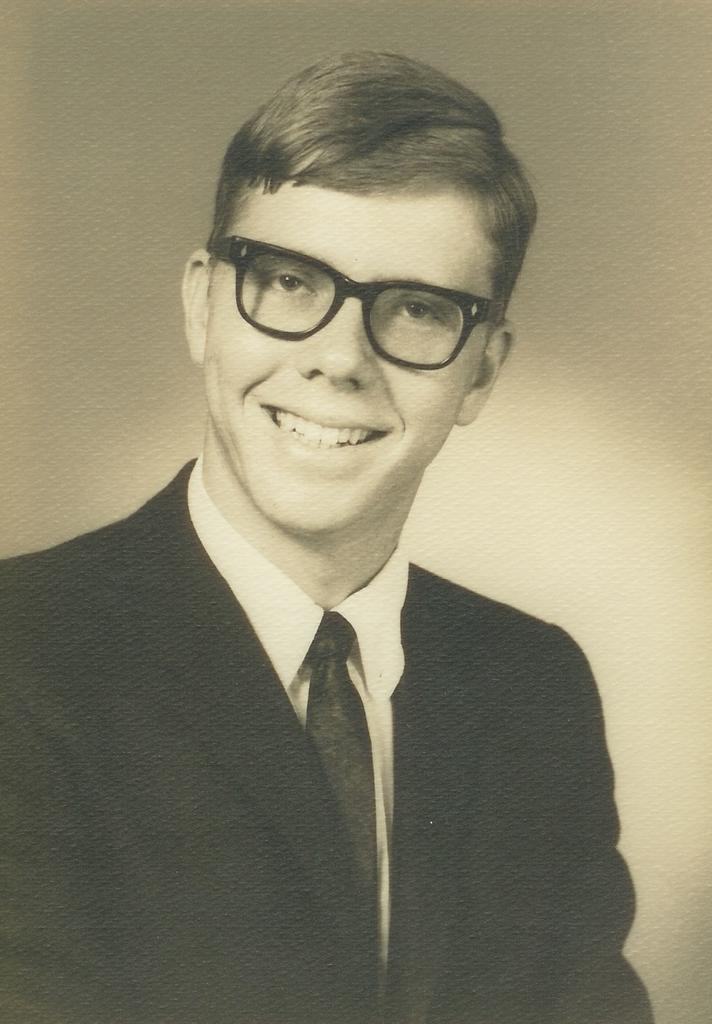 Some things stand out vividly in my mind as I traverse the decade between the events of my last post and my high school graduation (my senior picture is included here). By the time I was actually forming the barest beginnings of relationships with black kids, I was in High School.
I didn't play with black kids. I didn't visit their homes. My parents didn't talk to their parents on a social basis as far as I ever knew. I had no black teachers or black doctors. The black guys I saw most often were the ones that jogged behind the garbage truck as it made its rounds in our neighborhood. As the truck rolled slowly along, they had to run to keep up, grab full cans, and toss the contents into the hopper. They were very sweaty and very dirty and it seemed to confirm what I had been told about black people. Somehow it never occurred to me that the way they had to run and work contradicted the idea that they were lazy. I just thought they had to run or get left behind. Besides, maybe if they were smarter they could get a better job. Then they could be clean and have nice clothes.
Just a note here: I am writing about what I thought. I am not writing what I wish I had thought. I am not writing what I want anyone else to ever think about black people. I want to tell the truth. I have been told that the truth will set me free. I pray that God will use the truth to set me free. He has made a lot of great changes in me already. I am eager for more!
So I remember the guys who had to run to empty garbage cans for a living. Once in a while we left the suburbs and there were black people all around, but they seemed sort of like a backdrop. You don't think about being friends with the scenery in a play. The stage is set and you just walk across it and say your lines and talk to the other actors, who just happened to be all white people.
However, around age 10 or 11, I was involved in a rare outing through downtown New Orleans.
A sporting goods store had helped to sponsor our little league baseball uniforms. The coaches piled us into the back of a pick up truck or two and slowly drove us from the suburbs to the shop to show our appreciation for the spiffy uniforms we were wearing (a cheap T-shirt with our team name and matching ball cap). As we got closer to the store, we passed through a black neighborhood. I remember wondering why they didn't take more time to fix up their houses. And then I saw several black kids standing on a corner, watching us roll by. One little boy was dressed so wretchedly that I looked him in the eyes and felt very sorry for him. I had just opened a pack of gum. I only had moments to think. Maybe he would like some gum! That would surely make him happier. I hurled the open pack and the sticks of gum scattered at his feet. He hopped back a little, and I could tell that he just thought I was throwing my trash at him. He didn't even look down at the gum that was scattered on the ground. He didn't yell or seem to get mad. He just seemed very, very sad. I wanted to be able to let him know that I was trying to be nice. But the truck rolled on and he faded into the distance. I didn't want to talk about it with my teammates in the truck. I didn't even want to remember what happened. But here I am, more than four decades later and the scene and the feelings are burned into my brain.
Here is another place where I would like to lie. Gosh, I could say, how my heart was changed. I saw everything differently from that day on. But that is not what happened. I didn't forget. But I did ignore how I felt. It was pretty easy. I was busy being a kid. And no one ever asked me how I felt about poor black kids. They told me how to feel. To look down on them. To feel sort of disgusted by all their bad traits as detailed to me by friends, family, and media.
Another incident pierced my racist armor briefly a few years later. I was with my family visiting the Fort Worth, Texas zoo. I have always liked going to zoos. Yes I feel sorry for the caged up animals, but they are just so impressive. I want to drink it all in. As my parents and two brothers and I walked along we saw the result of a huge change that was happening by that time. Someone had decided that it should be o.k. for black families to visit the zoo, not just white families. And suddenly, there they were a black mom and dad and two little black kids. I remember that one of the kids was a little girl about 4. They were all dressed very nicely. It was a lot nicer than I ever dressed because we weren't a church going family. The little girl had one of those frilly white little girl dresses on and her hair was in little braids.
My father saw the black family too. "Why do they let those ______s come here", he said. Most of my friend's dads would have said "damned ______s". But my dad had been raised in a higher class home were it was considered rude to curse! Then my mother did something she rarely did, she openly disagreed with my dad. "Oh Charles", she exclaimed, "Look how nice they are dressed. Look how happy it makes the little children. They aren't hurting anything!".
My dad became silent as he often did when he was very, very angry. I felt confused. What was going on? But it was clearly not a time to ask questions. It was just about never time to ask questions on this topic. And this memory, too, has haunted me for decades. Even so, I continued to use the same word for black people that my Dad and all my buddies used.
When I was in the last year of Junior High School, I knew exactly what the High School principal meant when he gave a talk to all us 9th graders. I already knew why our classes had been split into all boy and all girl classes. I already knew why I would have to go to a public high school that had been changed to be all boys. One high school of 1000 white boys and all the way on the other side of the parish, one high school for the 1000 white girls. The principal said, "As you all know, next year the dark clouds will be rolling into our schools. None of us is happy about it, but we can't stop it! I expect all of you to ignore them, and we will do our best to get on with your schooling." He said a bunch more, but I remember wondering why he said "dark clouds" when we all knew that he meant '______s". And I remember being really mad at this group of black boys that were going to go to my high school. They were only 50 boys. And I had never met any of them, although they lived in a neighborhood even closer to the high school than my own.
I was mad because I had to go to an all boys high school, just when I starting to learn how to talk to girls and even have a "girlfriend". And it had to become an all boys school, because if a black boy ever even talked to or accidentally touched a white girl, we all knew that that boy would be beaten to death. I didn't think I would do that myself, but I knew for sure it would happen. So just because they wouldn't stay put in their own school, those black boys were ruining the one thing about high school that I was looking forward to, being around hundreds and hundreds of teenage girls. I was mad. My friends were mad. Our parents were mad. And if that many people get mad, madness is the inevitable result. Madness prevailed the next year when I started high school. But that is a story for another post.
May God deliver us from the madness that comes when we are so sure that we are better than others.
Kent
Monday, October 10, 2005
Do I Look Like A Racist In The Picture Below?
Guess it depends on who is looking at the picture.
The fact is that I was a racist in the full blown, deep south, 1950's, thought I was being nice if I called a black person "colored", sense of the word racist. I lived in the suburbs of a city that was about 50% white and 50% black. In fact, I think the whole state of Louisiana may have been 50% African American (still no final word from my darkest skinned friends on whether black or African American is better).
I thought I knew a lot about black people. I knew it because grown up people and the little kids I played with told me stuff all the time. They told me black people were lazy and not very bright at all. My dad said that a black person's skull (o.k. he didn't call them black persons, but I refuse to fill my blog with what he did call them) could turn a 22 caliber bullet. When they ate pork chops, they ate the bone and everything with their powerful jaws. However it was widely known that their Achilles heel was located in their shin. For some reason, it was widely believed that black people could be felled by a quick kick to the shins, where as a bullet to the skull would simply cause them to be a bit more dazed than usual. I thought I knew a whole bunch of other stuff about black people. The stuff I wrote is just a small sample. You may be thinking, "Wow, what a dumb little kid you were to believe that stuff." I was ignorant, but I was not dumb. I was reading at the fourth grade level before then end of my first year of school. In 1964, in the ninth grade, I was first out of a few hundred kids competing in a state level science competition. I still remember a lot of the science I regurgitated in that test, and it was mostly pretty accurate even by todays standard. Nonetheless, I was still believing all that stuff I had been told about black people.
"How could that be?" you might ask. I often wonder that also. This is a sin curse world. I am a sinner (saved by grace, and that not of myself). But lots of sinful people don't believe all the dumb crap that people told me about black people.
I guess the main answer is that the only people I ever actually talked to were racist white people.
I can remember vividly the first time I actually spoke to and even played with a black kid my age. I was staying at a babysitters house in a poorer part of town. Even I could tell it was real poor because her bathtub had claw feet and a big weird brown stain were the water drained out.
I have know idea what that kid was doing near her house. He looked at me shyly. Maybe I was the only white kid he had ever actually talked to. But since we were only about 6 years old, we decided to stop being shy and just play together. He did talk funny. And he probably smelled as bad as I did in my jeans with no shirt or shoes. He may have been in ragged clothes, but that is not the sort of thing that 6 year old boys pay much attention too.
We played really fun games like "run around and hide in the hedge" or "point at stuff and laugh". I remember thinking that we were having a pretty good time. But I was a little afraid that somebody was going to yell at me any minute. After all, I was playing with a black kid! He seemed pretty much like a normal kid, only he wasn't. He was black. I felt a bit puzzled about it all, but I didn't dwell on such things then.
Well, I would like to say that we became close friends and that I helped him start the civil rights movement in Louisiana. However, what really happened was that we played a few times and then my mom changed babysitters. He would be really old now. 55 or more. Maybe he is a CEO. Maybe he is washing cars.
I would also like to say that that was the beginning of many fine relationships that I had with black kids. But as far as I can remember, I never played with or even spoke to another black kid until I was about 16. But that is a story for another time.
So from my earliest memories until I was in my late teens, I pretty much believed all that crap that people told me about black people. Now I am very sorry that I did. I went through a long period when I thought that everything that everyone had ever told me was probably crap (except science of course. Nobody could ever question science.). I thought morals were crap. Nice clothes were crap. Haircuts were crap. Well, if you have ever been a hippie or read what they wrote, you will have some idea of what I thought about a lot of things. That too is a story about another time.
So if you ever wonder why someone believes something that is really wrong, maybe it is just that no one has told them the truth and they never got to see the truth lived out in real life.
The fact is that I was a racist in the full blown, deep south, 1950's, thought I was being nice if I called a black person "colored", sense of the word racist. I lived in the suburbs of a city that was about 50% white and 50% black. In fact, I think the whole state of Louisiana may have been 50% African American (still no final word from my darkest skinned friends on whether black or African American is better).
I thought I knew a lot about black people. I knew it because grown up people and the little kids I played with told me stuff all the time. They told me black people were lazy and not very bright at all. My dad said that a black person's skull (o.k. he didn't call them black persons, but I refuse to fill my blog with what he did call them) could turn a 22 caliber bullet. When they ate pork chops, they ate the bone and everything with their powerful jaws. However it was widely known that their Achilles heel was located in their shin. For some reason, it was widely believed that black people could be felled by a quick kick to the shins, where as a bullet to the skull would simply cause them to be a bit more dazed than usual. I thought I knew a whole bunch of other stuff about black people. The stuff I wrote is just a small sample. You may be thinking, "Wow, what a dumb little kid you were to believe that stuff." I was ignorant, but I was not dumb. I was reading at the fourth grade level before then end of my first year of school. In 1964, in the ninth grade, I was first out of a few hundred kids competing in a state level science competition. I still remember a lot of the science I regurgitated in that test, and it was mostly pretty accurate even by todays standard. Nonetheless, I was still believing all that stuff I had been told about black people.
"How could that be?" you might ask. I often wonder that also. This is a sin curse world. I am a sinner (saved by grace, and that not of myself). But lots of sinful people don't believe all the dumb crap that people told me about black people.
I guess the main answer is that the only people I ever actually talked to were racist white people.
I can remember vividly the first time I actually spoke to and even played with a black kid my age. I was staying at a babysitters house in a poorer part of town. Even I could tell it was real poor because her bathtub had claw feet and a big weird brown stain were the water drained out.
I have know idea what that kid was doing near her house. He looked at me shyly. Maybe I was the only white kid he had ever actually talked to. But since we were only about 6 years old, we decided to stop being shy and just play together. He did talk funny. And he probably smelled as bad as I did in my jeans with no shirt or shoes. He may have been in ragged clothes, but that is not the sort of thing that 6 year old boys pay much attention too.
We played really fun games like "run around and hide in the hedge" or "point at stuff and laugh". I remember thinking that we were having a pretty good time. But I was a little afraid that somebody was going to yell at me any minute. After all, I was playing with a black kid! He seemed pretty much like a normal kid, only he wasn't. He was black. I felt a bit puzzled about it all, but I didn't dwell on such things then.
Well, I would like to say that we became close friends and that I helped him start the civil rights movement in Louisiana. However, what really happened was that we played a few times and then my mom changed babysitters. He would be really old now. 55 or more. Maybe he is a CEO. Maybe he is washing cars.
I would also like to say that that was the beginning of many fine relationships that I had with black kids. But as far as I can remember, I never played with or even spoke to another black kid until I was about 16. But that is a story for another time.
So from my earliest memories until I was in my late teens, I pretty much believed all that crap that people told me about black people. Now I am very sorry that I did. I went through a long period when I thought that everything that everyone had ever told me was probably crap (except science of course. Nobody could ever question science.). I thought morals were crap. Nice clothes were crap. Haircuts were crap. Well, if you have ever been a hippie or read what they wrote, you will have some idea of what I thought about a lot of things. That too is a story about another time.
So if you ever wonder why someone believes something that is really wrong, maybe it is just that no one has told them the truth and they never got to see the truth lived out in real life.


Thursday, September 29, 2005
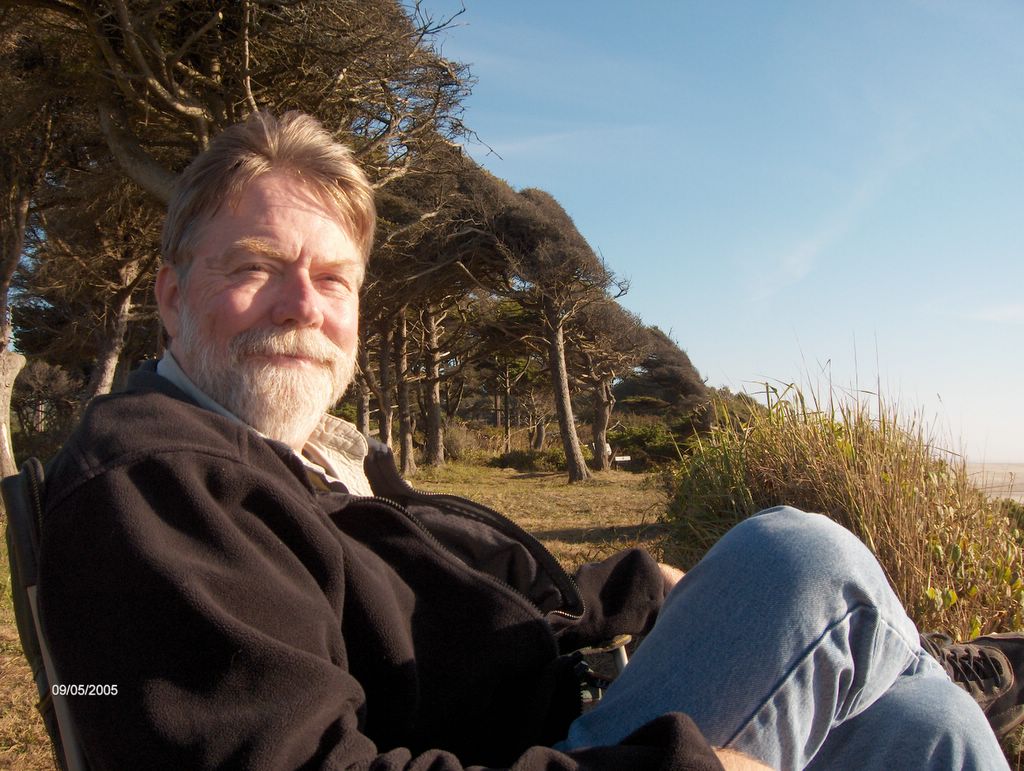
Friday, September 23, 2005

Now My Pammy Has Moved Away
They were my children. They still are my daughters. But now they are grown ups.
Pamela has done so many things and gone so many places already. And now she is just a two hour drive away, but in some ways her life is more different from mine than it has ever been.
She will be commuting to school. She will be living in a large city. She will be working a job and taking a full course load at the same time. They are all experiences that are close to what I have know, but quite different. Somehow when she was in England and Austria it was just sort of a dream land far away. Now it is nitty gritty real life, and yet I hardly know how to imagine it.
I love Pamela. I miss her.
Pamela has done so many things and gone so many places already. And now she is just a two hour drive away, but in some ways her life is more different from mine than it has ever been.
She will be commuting to school. She will be living in a large city. She will be working a job and taking a full course load at the same time. They are all experiences that are close to what I have know, but quite different. Somehow when she was in England and Austria it was just sort of a dream land far away. Now it is nitty gritty real life, and yet I hardly know how to imagine it.
I love Pamela. I miss her.
Saturday, August 20, 2005
Julia Moves To Norway
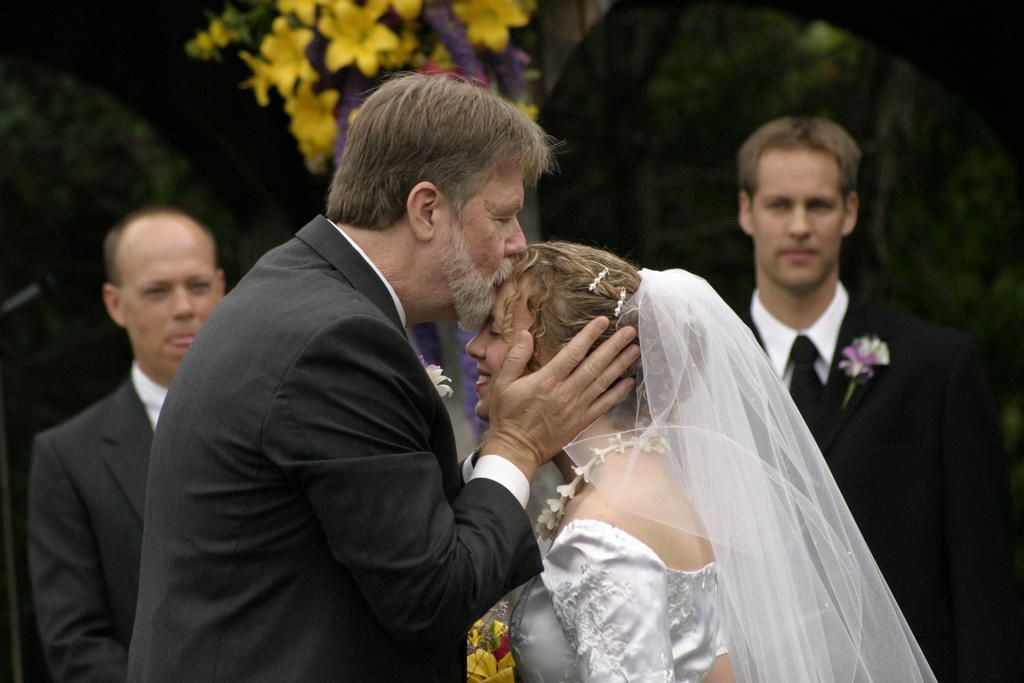
How can I be happy for someone and sad about what's going on with them at the same time. I suppose it happens all the time to me, but sometimes it becomes really obvious. Julia has been growing up for 22 years now. I was happy when she was a big girl and could go to school. But I still cried the first time we drove up and instead of walking her in, I just dropped her at the front door and she took it from there.
I was very happy when she entered Trinity to study linguistics, just as she wanted to do.
But I cried when we left her in the parking lot of her dormitory and drove away.
Now I am very happy that she has married Viggo. I am very happy that they are on the first leg of their journey together. Living in Norway. But once again, I cried when I thought of her moving so far away.
The crying is selfish I suppose. These are good things that Julia has experienced. And I think I would be sad for her if she could only think to hang around here in Philomath, unmarried, without a goal to work towards. So since she is doing all these wonderful things, the only real problem is that I realize how long it will be between times when I hug her and tell her face to face how much I love her. That is not a selfish thing to want. However, I want to care more for her happiness than for my opportunity to enjoy being with her. And really, I do. I don't cry all the time. In fact I seldom cry at all. But I do feel some sadness when I remember that my little girl is now a grown woman and is far away. Now would be a good time for me to remember that our spirits are in fellowship and that once this brief life on earth has passed, we will have all of eternity to visit each other whenever we like.
The attached picture is how I choose to remember one of the happiest and most moving times in my life.
Subscribe to:
Comments (Atom)
